Costly Care: Patients, lawmakers push back on hospital facility fees
States and Congress consider action on hospital fees after patients report surprise charges
STATE COLLEGE, Pa. (InvestigateTV) — Brad Cardinale has suffered from chronic back pain for the last 10 years. He went to a pain management clinic at Mount Nittany Healthcare in State College, PA for treatment.
“We tried things that began with simple, like trigger point injections with, a numbing agent. It didn’t work. And then ultimately, I was, advanced to a pain treatment where they basically deaden or cut off the nerves to the spots in your back that have pain,” Cardinale said.
Cardinale described the procedure as quick and routine.
“Laid on a table. Had a probe inserted into my back. Used the equivalent of microwaves to deaden the nerve. And in maybe ten minutes my shirt was back on. I was leaving out the door,” Cardinale said.

Later, he received a big surprise – the bill.
“There was a fee that was roughly around $800. And another one that was more than $500. It took me several months of calling and emailing the business office and people in charge of billing to try and hear that they were both considered facilities fees. And to this day, I haven’t got an answer as to why there are two facilities fees,” Cardinale said.
What are facility fees?
A facility fee is an extra charge added to a medical bill by a hospital or hospital-owned clinic, which health systems say covers operational costs. Patients have complained that the fees are not disclosed before an appointment is made or are disclosed using confusing language.
InvestigateTV asked Cardinale what the conversation was like when he tried to get answers about the fees.
“It was infuriating, to be honest,” Cardinale said. “And no matter what I would ask, it was almost always the same answer.”
Through its customer service portal, the health system said the fees were “for the use of the facility where the procedure was performed,” adding that this is normal billing for this type of visit and that everything was billed correctly.
Over the past four years, our national investigative team has examined how surprise medical billing has impacted consumers. Patients nationwide have expressed frustration that they should have been informed upfront about the exact costs of facility fees to make an informed decision about where to seek care.
“So, you’re having to accept treatment not having a clue, are these going to be $50? Are these going to be $200, are these going to be thousands of dollars? And from what I’ve heard from other people is they vary quite a bit,” Cardinale said. “Nobody knows what these facility fees are going to be until you get your bill in the mail.”
Virginia patient files complaint with attorney general
In Richmond, Virginia, Jane Hotchkiss filed a complaint with the Virginia Attorney General’s Office after receiving a facility fee she said she was never told about.
“I didn’t know I was paying for room rent when I was going to see the doctor,” Hotchkiss said.
Hotchkiss went to an orthopedist appointment, paid her $10 co-pay through Medicare and received a shot after X-rays. Three days later, she received an email bill for $312. She said she had never heard of a facility fee prior to the visit.
“Any notice would’ve been better than zero,” Hotchkiss said.
Hotchkiss said she believes the fees are used to generate additional income for the hospital.
“Why are they doing this?” Hotchkiss said. “I think they’re doing this to raise money. And I think they ought to have a fundraiser instead of using me and other people who are not sure what’s going on. And other people that are really struggling to pay their bills already.”

After what she described as a runaround from the billing department and her insurer, Hotchkiss filed her complaint with the Virginia Attorney General’s Office.
The Virginia AG’s office did not respond to InvestigateTV’s request for comment on Hotchkiss’ complaint.
Hotchkiss said she hopes Virginia will join the more than 20 states that have passed laws reforming facility fee billing.
“I hope we can talk about some legal changes in Virginia so that people know up front,” she said.
Hotchkiss said she is now receiving calls from a collection agency.
“I think a facility fee is the wrong approach to paying for medical care,” Hotchkiss said.
InvestigateTV reached out to VCU Health, where Hotchkiss received treatment. It replied in a statement saying:
To protect patient privacy and comply with federal requirements, we cannot discuss an individual patient’s care or billing.
That being said, we understand unexpected medical bills can be frustrating, and we take those concerns seriously. A patient’s financial responsibility can vary based on the services provided, location of care, and individual insurance coverage.
VCU Health follows federal requirements for provider-based billing and continues to strengthen price transparency and patient communication.
When a patient believes a bill is incorrect or has questions about how a charge was processed by their insurer, we encourage them to contact us so that we can review the circumstances directly with them. Our patient billing team can be reached at (804) 828-0966.
We are committed to making healthcare billing clearer and easier for patients to understand.
State laws target billing
More than 20 states have passed laws to reform medical billing when it comes to facility fees, according to a 50-state review by Georgetown University.
But those state laws vary widely.
In Maryland, the Facility Fee Right to Know Act requires hospitals to provide formal notification and disclosures to patients about hospital outpatient clinic charges or facility fees, in both oral and written formats.
In Indiana, state lawmakers passed a bill requiring facility fees to be included in good faith estimates provided to patients. The law also requires each hospital to submit an annual report to the state on facility fees collected.
Several other states require hospitals to include facility fees in their upfront estimates given to patients prior to procedures.
Ohio only bans facility fees for telehealth appointments. Louisiana only requires that outpatient facilities post signs that they may be charged a facility fee. Nevada requires hospitals to submit annual reports that include listing facilities that charge facility fees, total revenues received from facility fees, and the total number of facility fees charged.
Advocates say more needs to be done to reform patient billing and hospital transparency.
Congress examines hospital fees
U.S. Rep. Jason Smith, R-Missouri., chairs the House Ways and Means Committee. During a committee hearing, he said, “The American people are fed up with outrageous prices that seem artificially high.”
Over the past few months, the committee has called on hospital CEOs and insurers to address hospital fees within the health care industry.
“Regardless of a hospital’s geography, we’ve seen health systems leverage payment differentials between hospital owned clinics and independent physician offices direct more money to their corporate coffers,” Smith said.
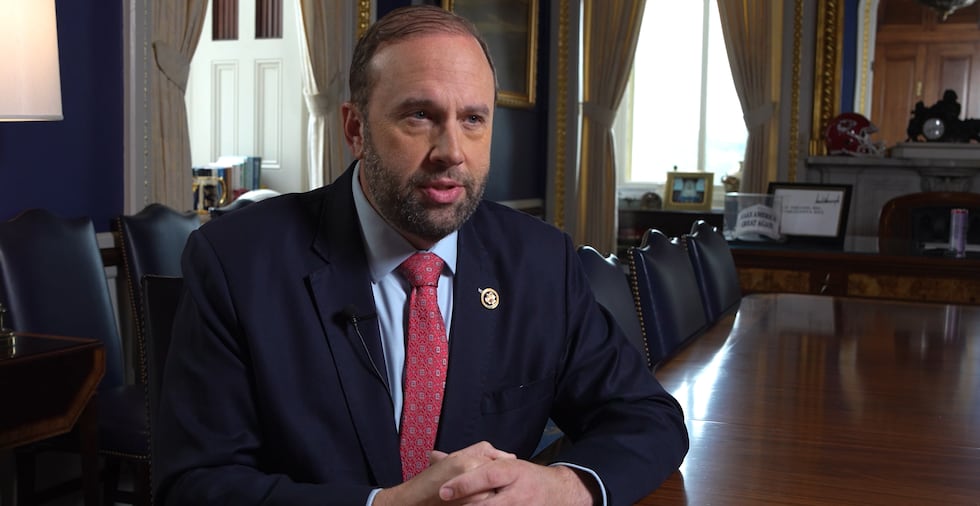
InvestigateTV asked Smith why he was “fiery” during the Ways and Means Committee hearing in April.
“I was probably fiery because I’m frustrated. Just like every American is for the cost of healthcare,” Smith said. “Some of the concerns that we had is why does it cost so much more for the same service to be provided by you all than it does for an independent medical practice.”
Smith said he wants to draft bipartisan legislation to address issues raised in the hearings, including hospital consolidation and facility fees.
“And I think we can do it in a bipartisan approach. Which I think is super important. Because if it’s bipartisan, it’s gonna have a constant force and strength for the American people,” Smith said.
Hospital industry response
Molly Smith, Group Vice President for Public Policy at the American Hospital Association, said hospital fees are necessary for hospitals to continue operating.
“So, in an ideal world, health plans would just pay for the care that their enrollees need. Unfortunately, we are increasingly hearing that insurers are refusing to cover those costs,” she said. “And so therefore, those costs which need to get paid so that we can maintain all of that, you know, important functionality of a hospital, you know, they do end up having to bill the patient.”

When asked whether a cap on facility fees could be a solution, she said that could carry risk.
“So let me tell you, the biggest risk of a cap on facility fees is that, frankly, you end up not paying enough to keep the health care system fully functioning,” Smith said. “I mean, right now, facility fees are covering a wide range of items and services. Both the salaries for all of this are supportive staff, the nurses, the tax, the lights, the buildings. You put a cap on that and unfortunately, you may just not be putting enough into the system. Those services are then lost to the entire community.”
She said facility fees also help fund a hospital’s capacity and the cost of maintaining 24/7 emergency readiness, such as having surgeons and emergency physicians available in case of a late-night crisis or a major accident.
InvestigateTV asked Rep. Smith, who is not related to Molly Smith, about industry leaders who warn hospitals could go bankrupt without the fees.
“It’s not true. It’s absolutely not true,” he said. “We have to make sure that access of care is our number one priority.”
“When have you seen a huge hospital system close their doors? I don’t know of one,” Rep. Smith said. “The hospitals that are closing their doors are those independent hospitals that are in communities that are less than 5,000 people. Those are the ones that we need to be helping, assisting and protecting, not the huge empires.”
Patient reaches deductible
Cardinale ultimately paid the clinic until he reached his $3,200 deductible.
He said his frustration remains, especially for people who don’t have insurance but still need care.

“Our healthcare system in America is fundamentally broken at the moment. And, you know as well as I do that people are losing their healthcare because they can’t afford it,” Cardinale said. “We wouldn’t tolerate that kind of behavior from any business, so why do we let medical companies do that kind of thing? We shouldn’t.”
Mount Nittany Health, where Cardinale was treated, has not responded to multiple requests for comment.
Consumer advocates have said one change they would like to see for facility fees is a site-neutral payment policy, which would prohibit providers from charging more simply because of where care was provided.
Critics, including the American Hospital Association, argue that limiting reimbursement would underpay hospital outpatient departments and could lead them to stop offering some services.
Copyright 2026 Gray Media Group, Inc. All Rights Reserved.