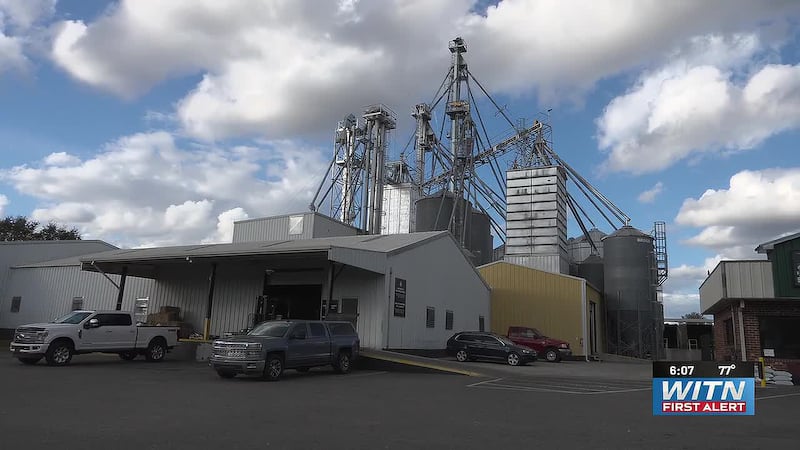
Farmers speak on ongoing drought conditions in eastern North Carolina
BEAUFORT COUNTY, N.C. (WITN) - Even with rain expected this week, farmers in eastern North Carolina say it may not be enough to protect crops already stressed by prolonged dry conditions and extreme heat.
Officials say most farms in the state rely largely on rainfall instead of irrigation. With showers arriving in scattered bursts, farmers say the relief has been temporary — and the need is for steady, widespread rain to support crops and stabilize profits.
Chad Poole, a third-generation farmer, said the dry stretch has put added pressure on an operation his family hopes to keep for future generations.
“We’re a third-generation farm. My family started it back in the 1920’s and 1930’s, and we’re looking to pass that on to the next generation,” Poole said.
Poole said the lack of consistent rainfall means farmers have limited options once the season begins.
“We’re at the mercy of whatever was in the soil at the time we started the growing season and what comes from the rainfall,” he said.
Rod Gurganus, director of the Beaufort County Cooperative Extension, said rain has been too inconsistent — especially as corn moves into critical growth stages.
“Rainfall has been very sporadic this year. We get three or four tenths at a time, and that’s good when the crop is small, but once it gets bigger and approaches the reproductive growth stage, it needs more,” Gurganus said.
Corn typically needs about 1 to 1 1/2 inches of rain each week to maximize yield, officials say. With some fields receiving closer to a quarter-inch at a time, conserving moisture has become a top priority.
“The biggest thing we can do right now is try to conserve as much rainfall as we can get,” Poole said.
Poole said he is using water-control structures and other conservation methods to hold as much moisture as possible in the soil. Still, Gurganus said damage has already been done in some areas.
“It’s already seen sufficient stress to reduce yield, so we are anticipating a reduced yield for most of the corn crop in eastern North Carolina,” Gurganus said.
Beyond corn, Poole said dry conditions are causing anxiety across the farm community, particularly with much of the crop in a critical stage.
“Extreme temperatures throughout June really enhanced the water demand that was required by the crop, and we’re seeing a lot of that now,” Poole said. “The difference here is that we’re getting some scattered thunderstorms — you know, they help on the low. We need widespread coverage across the state to get us out of this situation.”
Poole said corn is showing the most stress compared with other major eastern North Carolina crops, adding it is less resilient than soybeans and cotton.
Gurganus said experts are monitoring water levels and urged farmers to have water-conservation systems in place ahead of any additional spikes in temperature.
Copyright 2026 WITN. All rights reserved.